
Get Your Boiler Ready for Winter: 5 Simple Checks Before the Cold Sets In
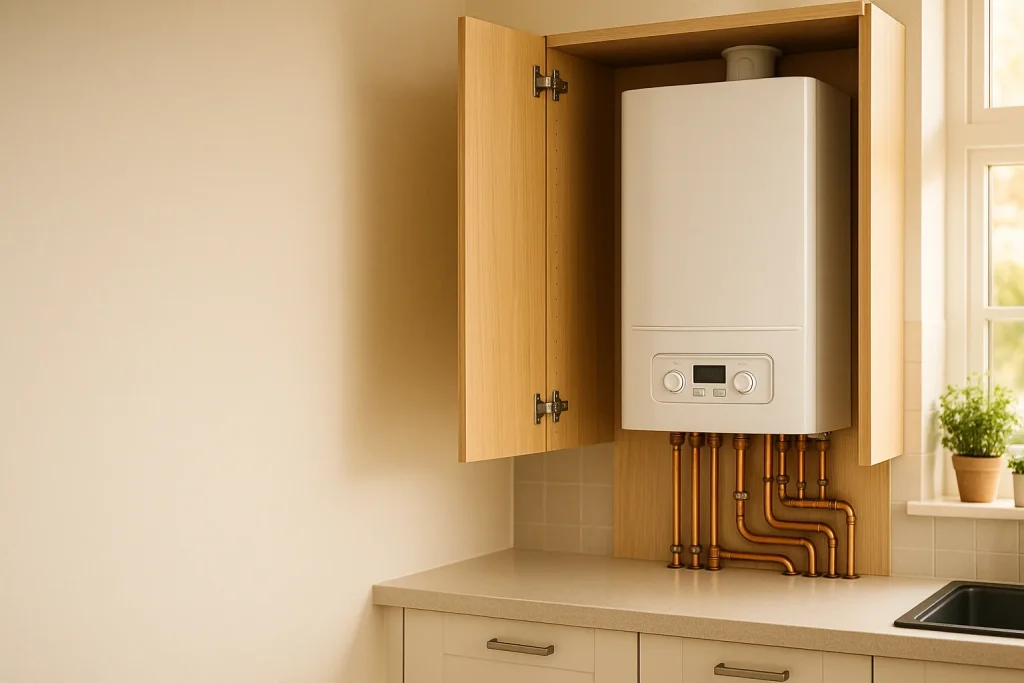
When the nights draw in and the first frost arrives, the last thing you want is a cold house and a boiler that won’t cooperate. A little preparation now can save you a lot of hassle, and often money, later. Here are five checks you can do yourself this week.
1. Test your heating early
Don’t wait for the first freezing morning to find out something’s wrong. Switch your central heating on for 20 to 30 minutes now, while it’s still mild. Then check that every radiator warms up properly. If one stays cold, or the boiler makes odd noises or won’t fire up, you’ve got time to sort it out before the cold really bites.
2. Set your combi boiler flow temperature to 60–70°C
If you have a combi boiler, the flow temperature is often set higher than it needs to be. Setting it between 60°C and 70°C is a good range for efficient winter heating. According to MoneySuperMarket’s boiler advice, this can cut energy use by around 9% to 13%. Your home will still heat up fine, and your bills may thank you. For more ways to save gas this winter, the Octopus Energy Winter Workout Guide is worth a look.
3. Check the pressure gauge: 1 to 1.5 bar
Find the pressure gauge on the front of your boiler. When the system is cold, it should read between 1 and 1.5 bar. If it has dropped below that, you can top it up using the filling loop. Check your boiler manual first, as the steps differ between models. If the pressure keeps dropping, there may be a leak somewhere. Don’t ignore that one. Get it looked at.
4. Bleed your radiators
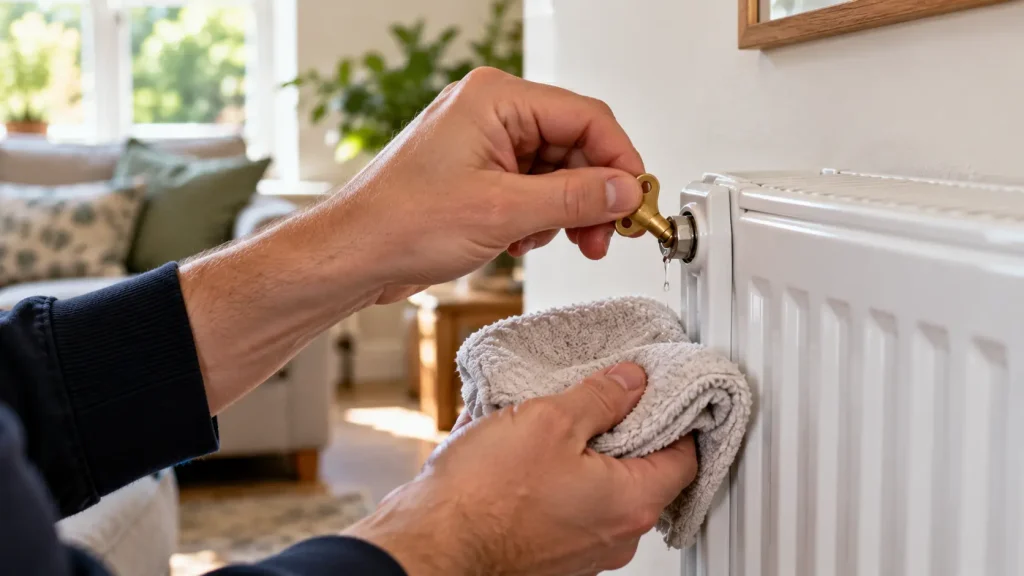
Are your radiators warm at the bottom but cold at the top? That’s usually trapped air. Using a radiator key, open the bleed valve at the top of the radiator slowly. Keep it open until the hissing stops and water starts to come out, then close it again. Have a cloth handy, as the water can be dirty. Afterwards, check the boiler pressure again, as bleeding can lower it. Top it up if needed. Your heat will then spread evenly through the whole radiator.
5. Insulate external condensate pipes
Most modern condensing boilers have a condensate pipe that runs outside. In a hard freeze, the water inside can turn to ice and block the pipe, and then your boiler shuts down, usually on the coldest night of the year. The fix is cheap and quick. Wrap any exposed section of the pipe in foam pipe insulation. Make sure it’s fitted snugly and secured well so it stays put in the wind and rain.
When to call someone in
These checks are all straightforward and safe for most homeowners. But if your boiler is showing a fault code, losing pressure again and again, or you smell gas, stop and call a Gas Safe registered engineer. Boilers themselves are not a DIY job.
Need a hand around the house?
If you’d rather someone else lagged the pipes or sorted a stubborn radiator, or you’ve got other jobs on the list before winter, get in touch. We’re local, we’re reliable, and we’ll get it done properly.
Handyman Services Lancashire– www.handymanlancs.co.uk
Leave a Reply